
OUR TEAM
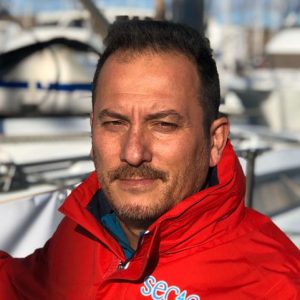
Vidal Martìn Martel
He studied cetaceans in the Canary Archipelago for 37 years. In 1993 he founded SECAC of which he is currently President and Scientific director. He was co-founder and first President of the Spanish Cetacean Society (SEC), co-founder and director of the Museum of Cetaceans of the Canary Islands (MCC). He directed numerous regional, national and European research and conservation projects on cetaceans. He is the author and co-author of several scientific articles published in different international scientific magazines. His main interest is focused on the biology of oceanic cetaceans, especially on beaked whales (family Ziphiidae). He was awarded the Environmental Sciences Award by the National Association of Environmental Sciences, the Cesar Manrique Environment Prize 2007 from the Canary Islands Government and the 2014 Severo Ochoa Prize awarded by the I.E.S. Agustín Espinosa.
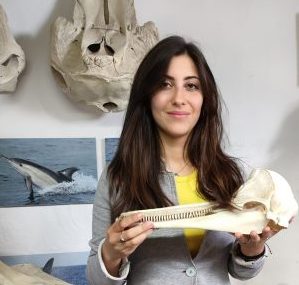
Francesca Fusar Poli
Graduated in Environmental Biology with a master’s degree in Experimental and Applied Biology from the University of Pavia, Italy. She studied the population of the coypu (Myocastor coypus), an invasive species in northern Italy. Lover of marine life, she was working as a marine biologist in the Maldives. Since 2018 she has lived in Lanzarote familiar with the island, its sea and its diversity. Francesca is the coordinator of the Canary Sperm Whale Project.
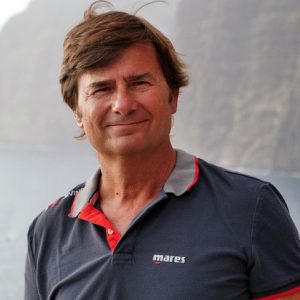
Rafa Herrero Massieu
Professional diver, diving instructor and CCR Expedition Mixer Gas Diver (Rebreather). Recognized filmmaker and international underwater camera. He has been the director of the documentary productions of the marine environment Aquawork since 1994. Rafael is a member of the prestigious Ocean Artists Society and a regular contributor to the world’s main television stations such as Canal Plus France, National Geographic Wild, Canal Xplora Canada, BBC, etc. He has been an underwater cameraman in the acclaimed BBC series Blue Planet II (2016-2017), gaining the 2018 Bafta Award for the most special moment with a sequence in episode IV of Blue Planet II.
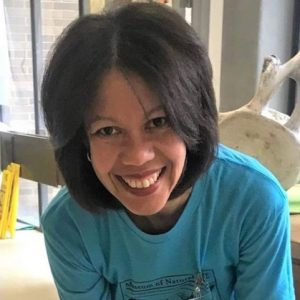
Ada Garcia
Bachelor’s Degree in Biology from Portland State University, Oregon (USA), followed by a Master’s in Biology with a research project focused on hybridization between two pinniped species: the California sea lion (Zalophus californianus) and the Steller sea lion (Eumetopias jubatus). Before moving to the United States, Ada lived in Gran Canaria for 10 years. She periodically travels to the Canary Islands to enjoy their good weather, happy people, and wonderful nature. To expand her experience as a researcher, Ada has attended the different courses and workshops related to the field of marine mammals offered by SECAC as well as internships in other scientific institutions in Europe.
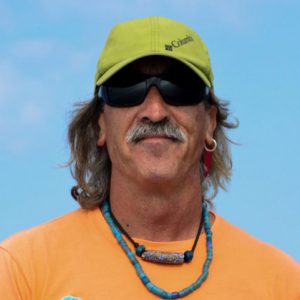
Teodoro Lucas Corrales
Graduate in physical education, professor and scientific disseminator in the field of cetaceans. Passionate observer of nature since he was a child, he is a world leader in cetacean photography, capturing unique moments in the life of these marine mammals through his snapshots. He was co-founder of Balfín, a marine education NGO through which he carried out several educational projects on cetaceans in schools in the Canary Islands reaching thousands of children. He is currently the President of NGO “Gigante Azul”, dedicated to the dissemination and education of cetaceans and the marine environment of the SO of Tenerife.
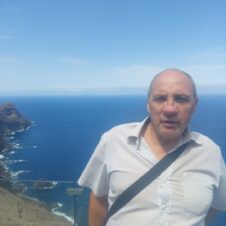
Angel Álvarez Elvira
Angel is a biologist. In 2002 he participated in the multidisciplinary project on cetaceans in the Strait of Gibraltar and adjacent areas. His training has focused on cetaceans with the Facultat de Veterinària – UAB. He is currently collaborating with SECAC in biological studies of stranded cetaceans and is finishing his master’s degree in marine mammals.
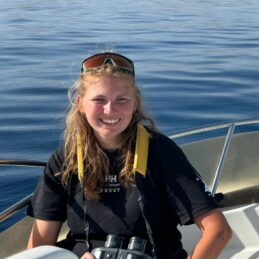
Caroline Cooreman
Caroline Cooreman holds a degree in Agronomy, with a specialization in Animal Technology, from the Haute École Louvain en Hainaut (Belgium). She has collaborated with various scientific organizations on conservation projects and has experience in cetacean research, including fieldwork and data analysis. She is currently part of the SECAC as a researcher, where she participates in research and conservation projects.